Sunday, October 9, 2011

Life after being a Lineman


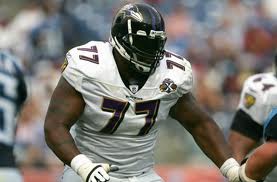
Football linemen, known for their big and stout bodies, commonly experience many weight-related issues as a player. It can be tough for some of these players to follow a healthy diet as they strive to build and maintain their large stature. However, with proper guidance and nutrition education, football linemen (and ALL athletes) can achieve their dietary goals for both health and optimal sports performance.

It is not uncommon for football linemen, either ending their college or NFL football careers, to acquire diseases such as diabetes, high blood pressure, and heart disease. Many continue to eat the large quantities of food required for when they were players, not keeping in mind their drastic decrease in exercise levels. The article (see the link below) talks about former offensive lineman for the Cleveland Browns and the Baltimore Ravens, Orlando "Zeus" Brown, who recently died from diabetes complications.

All athletes need to remember that nutritious diet habits not only fuel their bodies for their sport, but it is also essential for ensuring healthy bodies for years to come. 

Wednesday, October 5, 2011

Monday, September 19, 2011

Tailoring your Tiger Tailgate


Well, it's that time of year again. A time of pre-game tailgating, football viewing parties, and post-game celebrations. As a New Orleans native and LSU Tiger fan, I must say I've experienced some of the best tailgates anyone could imagine. There is nothing like some good old Southern Hospitality as you walk the grounds of the most dedicated football fans in Louisiana. But, with that Southern Hospitality comes FOOD. Lots and lots of delicious Southern Comfort food. Some popular Louisiana tailgate dishes include: Jambalaya, Seafood and Andouille Gumbo, Fried Catfish, Hot Boudin sausage and the traditional BBQ dishes such as Hamburgers, BBQ chicken, Pulled pork sandwiches, and more!

Tailgating is not just in Louisiana; it is an All-American tradition! It would be wrong of me to tell tailgaters to completely change their favorite football foods, but here are some ideas to Tailor your Tailgate in a healthy way!

Small changes to menu items can make a big difference in the nutritional content of your meal.


This football season, try to:
  • Choose lean cuts of meat such as:
    • Skinless chicken
    • Loin/round of beef
    • Extra Lean ground beef
    • Ground Turkey
    • Pork Loin
    • Turkey Sausage
  • Cook with Olive oil or Canola oil
  • Use 100% whole wheat hamburger and hot dog buns
  • Throw some fresh vegetable on the grill- spice/season them up!
  • Create your own fruit tray
  • Prepare finger sandwiches on whole wheat bread
  • Serve salsa, hummus, and bean dips with:
    • Carrots
    • Celery
    • Cucumbers
    • Whole grain crackers
More Tailgating Tips:
  • Take a step back from the tables of food and browse at the choices before digging in.
  • Always go for the grilled options.
  • Watch your portions: fill your plate with more fruits and veggies rather than meat and rice dishes.
  • Sip water throughout the day to stay hydrated.
  • Snack on fruits, veggies, baked chips, and nuts instead of cookies and other sweets.
  • Monitor alcohol intake. Alcohol calories add up extremely fast. More importantly, it has NO sports performance benefit. Be smart when it comes to alcohol.
  • Balance is key! No food is good or bad. All foods fit into your nutrition plan if you make sensible choices.

Here are some substitutions that can decrease the fat and calories in many of the typical tailgate foods:

Instead of:
Try:
High fat beef burgers
Extra lean beef or ground turkey burgers
White buns
100% Whole wheat buns
Gumbo/ Jambalaya made with white rice and smoked sausage
Gumbo/ Jambalaya made with brown rice and smoked turkey sausage
Cheesy spinach dip or queso dip with potato chips
Chunky salsa, low fat bean dip, or hummus with raw veggies, baked chips, or whole wheat pita bread
Fried chicken and Fried fish
BBQ or grilled chicken and fish
Sodas, Sweet Tea, Fruit punch, other flavored beverages
Water, Unsweet Tea, Diet soda, Crystal Light


Food Safety is a must for all tailgates.
From the time you buy the food from the grocery to when you pack up all your leftovers, you should always keep your food safe.

  • Chop and prep meats and vegetables the day before, using separate knives and cutting boards to prevent contamination.
  • Pack raw meats and vegetables separately in a cooler, tighly in foil, and cover completely with ice.
  • Have a food thermometer on hand and clean after each use.
  • Cook all foods to a safe temperature:
    • Fish: 145 degrees
    • Beef, Pork, Veal, Lamb, and Egg Dishes: 160 degrees
    • Poultry, Casseroles, and Leftovers: 165 degrees
  • Wrap leftovers in foil and store in ice.
  • Throw out all refrigerated foods that have been sitting out for over 2 hours.

Have a happy and healthy football season!
Best of luck to your favorite teams!


Saturday, August 27, 2011

Michael Rodgers Tests Positive for Banned Stimulant in Energy Drink

Former American 100-meter champion Michael Rodgers tested positive for a stimulant found in an energy drink and could be ineligible for the world track championships later this month. Rodgers is the 2009 national champion and qualified for this year's team by finishing third at nationals. He said on his Twitter account that he tested positive.

USA Track and Field spokeswoman Jill Greer said the Anti-Doping Agency is handling his case and would decide Rodgers' eligibility for worlds. A hearing could be expedited and held later this week. A backup sample for Rodgers will be tested Wednesday. Tony Campbell, the agent for Rodgers, said the sprinter tested positive for methylhexaneamine, a stimulant that can be found in energy drinks. Campbell said Rodgers ordered a vodka with an energy drink at a club last month, two days before a meet in Lignano, Italy, where he ran the 100 and was a member of the U.S. relay squad.

"Bad decision on his part. Now he is paying the price for it," Campbell said. "We have to clear his name. That's the main thing we want to do right now. Mike is not a druggie. The only thing he is guilty of is making a poor choice." Two years ago, Rodgers was one of the feel-good stories coming out of nationals: An up-and-coming kid who once made a living selling shoes from the trunk of his car. Known for his bright headband, the 26 year old finished third behind Walter Dix and Justin Gatlin at U.S. championships in June.

"He's broken up by this," Campbell said. "I just told him, 'I hope it's an eye opener for you.' But it's tearing him up inside."

Writer: The Associated Press

August 15, 2011

Friday, August 19, 2011

Supplement Caution


Red Flag Supplement Words


Athletes are presented with a multitude of information about supplements, from many different sources. These may include the supplement's manufacturer, online stores, health stores, gyms, or friends and family.


Here are some RED FLAG indicators to watch out for if you are considering a supplement. 
**Please know that this is NOT a complete list and should only be used for reference.


Make sure to filter all potential supplements and any questions in regards to a particular product first with Shelly Mullenix- Athletic Trainer, Director of Wellness BEFORE you take it. 
Tommy Moffitt- Head Strength Coach and Jamie Mascari- Registered Dietitian can also answer your questions.

You should avoid any product that list or makes reference to any of the following:


All natural

Not for human consumption

Testosterone booster

Aromaste inhibitor Anti aromatase

Natural testosterone booster

Estrogen suppressor

Natural HGH/IGF-1 booster

Reformulated

Stimulant free version

Only FDA approved pro-hormone

Ephedrine free

Get our product before it is banned


Red Flag Supplement Ingredients

If any one of these ingredients or something similar is present in the supplement, we suggest not purchasing or using. You could have short-term or long-term negative health risks and/or fail a drug test.


7-Keto (DHEA)

Synephrine

Diuretic

Etioallocholen

Colostrum (bovine)

Superdrol (2a-17a-dimethyl-5a-androst-3-one)

Pro-hormone

Trione or Dione

19-nor

19-norandrosta

Androstene

Halodrol (4 chloro-17a methyl-androst-1-4 diene-3-17b-diol)

1, 3-dimethylamylamine (Most common)

Geranium oil extract

Geranium extract

DMAA

Geranamine (trademarked by Proviant Technologies)

Forthan

Ephedrine

MaHaung

Etiocholan

Estra

6 OXO (4-etioallocholen-3,6,17-trione)

Dianabol

17beta-hydroxy

17a-methyl

4,9-estradiene-3-one-17b-ol

Andro

Epistane (2a 3a epithio-17a-methyl-5a-androstan-17b-ol)

5a-androstano 2 3-c furazan-17b-tetrahydropyranol

Geranuim oil

Methylhexanamine

4-methyl-2-hexanamine

Pentylamine, 1, 3-dimethyl-

2-amino-4-methylhexane

2-Hexanamine, 5-methyl-
Source:
DrugFreeSport.com
REC (Resource Exchange Center)


Thursday, August 18, 2011

Nutritional Supplement Ingredient Warning: Geranium

American tennis player Robert Kendrick tests positive...

Health experts and anti-drug enforcers are scrambling to warn athletes and the general public about a potentially dangerous supplement ingredient with a harmless name: Geranium. In this article, you can read about the banned supplement ingredient that is commonly found in energy drinks and energy capsules that has resulted in competition suspension for a number of athletes.


There is additional concerns about the use of Geranium. Research has shown Geranium to have similar or potentially stronger effects than ephedrine, a nutritional substance that had been banned by most agencies overseeing collegiate, professional and international athletics. Geranium, coupled with the effects of the extreme heat of the South, makes for a lethal mix.


Click the link below for the full article:


Tuesday, August 2, 2011

The 3 R's of Recovery Nutrition

Are you getting your 3-R's?

Just as it is essential to properly fuel your body before and during workouts, practices, and competitions, RE-fueling is probably the most important. Have you ever gone through two-a-days and felt tired and sluggish and unable to perform at your best? Or have you ever competed in back-to-back tournaments and experienced a big lack of energy after the first one or two games? Well, Recovery Nutrition is at your rescue because post-exercise snacks/meals provide the nutrients that help refuel your energy stores and repair your muscles-- together preparing you for your next practice or event.

By knowing and consistently practicing the 3-R's of Recovery, your energy levels will dramatically increase and help you feel at the top of your game.

Learn to Love and Practice the 3-R's:

1. Reloading energy stores with Carbohydrates
2. Repairing and building new muscle tissue with Protein
3. Rehydrating with Water and an Electrolyte sports drink (e.g. Powerade)


Starting with number one: Carbohydrates are your muscles' and brain's MAIN source of fuel and energy. After workouts and practices, your carbohydrate or "energy" stores have been depleted. Your recovery snack/meal will help replenish this energy and get you ready for the next event or training session. Over the years, carbs have gotten a bad rep and are commonly recognized as "bad and fattening." Without healthy carbohydrate foods in your diet (particularly in your recovery snack/meal), you would be unable to acquire the energy to get you through your team workouts, practices, and most importantly... your games/competitions. Adequate carbohydrate consumption and proper timing is KEY to optimal performance.


On to number two: Amino Acids are the building blocks of protein, and protein is what makes up your muscle tissue. During tough workouts and practices, your muscle tissue breaks down. By eating a recovery snack/meal (comprised of BOTH carbohydrate and protein) as soon as tolerable, the amino acids from the protein foods will stop this breakdown and start repairing and rebuilding muscle. Protein also helps reduce muscle soreness- a big plus for athletes who train multiple times a day and on consecutive days.


And last but certainly not least, number three: Hard workouts usually come with lots of sweating. Sweating is definitely not a bad thing; it is how your body cools itself and maintains a healthy internal temperature. Now, what is bad is when you do not replace the fluids that you have lost during your workout/event. Rehydration should be your top priority post-exercise. Failing to properly rehydrate may result in becoming dehydrating during your next workout/event. Dehydration is a major stressor to the body- increasing your heart rate, your body temperature, inability to concentrate, and inability to perform at your best.


So now you may ask, how do I implement a sound recovery nutrition plan?

Start rehydration immediately. To monitor your hydration status, weight yourself before and after your workout. For every pound lost, drink 2-3 cups (16-24 ounces) of fluid (water + electrolyte beverage). *Make sure you are hydrating DURING your workouts, practices, and games in order to prevent water weight loss and fluid imbalances.

Refuel with a carbohydrate/protein snack within 30-60 minutes post-exercise. You should consume 0.5 grams of carbohydrate per pound of body weight in combination with 10-20 grams of protein within this time period. Repeat this every 1-2 hours until your next meal.


Need some Recovery snack/ meal ideas? Try these!

Peanut butter and jelly sandwich on white bread
Fresh fruit salad mixed with nuts and low-fat yogurt
Turkey and cheese on a flour tortilla
Tall glass of low-fat chocolate milk
Bowl of whole grain cereal topped with nuts, fruit, and low fat milk
Bagel spread with reduced-fat cream cheese
100% fruit juice and trail mix: (nuts, dried fruit, cereal, pretzels)
Water-packed tuna stuffed in pita bread
Apple and peanut butter
Low-fat yogurt mixed with cereal
Graham crackers topped with peanut butter & raisins
Fruit smoothie with a scoop of protein powder
Recovery Carb/Protein drink (Muscle Milk, PowerAde protein milk)
Don’t forget to REHYDRATE!